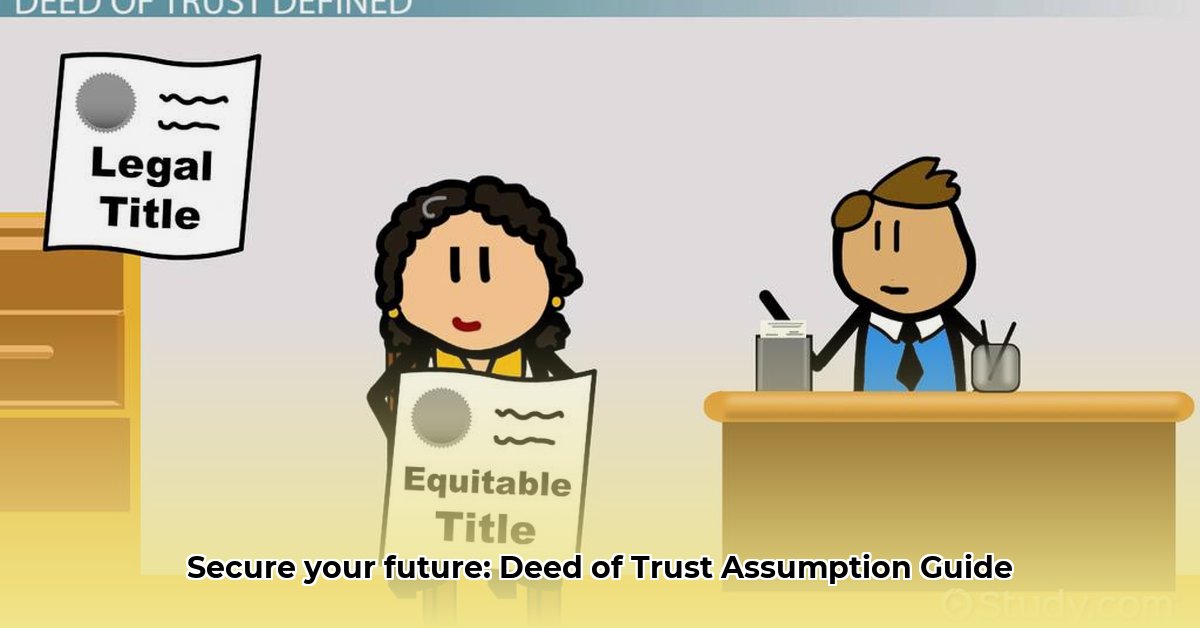
Understanding Deed of Trust to Secure Assumption (DTOSA)
A Deed of Trust to Secure Assumption (DTOSA) allows a buyer to take over the mortgage payments on a property from the seller, transferring the responsibility of the loan. This can be a beneficial financial strategy for both parties, but navigating the process requires careful planning and legal expertise. This guide will equip you with the knowledge to make informed decisions as you move forward.
Key Players in a DTOSA Transaction
Before delving into the specifics, let's identify the key players:
- Seller (Original Borrower): The current property owner who wants a buyer to assume their existing mortgage.
- Buyer (New Borrower): The individual or entity taking over the mortgage payments and responsibility for the property.
- Lender: The financial institution that holds the mortgage. Their approval is crucial for the assumption to proceed.
- Trustee: An impartial third party, often a title company or attorney, who oversees the deed of trust and ensures compliance.
A Step-by-Step Guide to DTOSA
The DTOSA process involves several key steps. We will break down the responsibilities of each party to facilitate a smooth and successful transaction.
Step 1: Seller's Actions
- Find a Qualified Buyer: Your buyer must meet the lender's creditworthiness requirements and be prepared to assume the loan. The seller's agent can help facilitate this search.
- Review the Deed of Trust: Thoroughly understand the terms and conditions of your existing mortgage. Look closely for any "due-on-sale" clauses that might prevent assumption.
- Obtain Lender Pre-Approval: Before significant efforts are invested, secure pre-approval from your lender to ensure the assumption is even possible.
- Legal Counsel: Enlist the assistance of a real estate attorney. This is essential to navigate the complex legal implications and documentation.
Step 2: Buyer's Actions
- Creditworthiness Assessment: The buyer must undergo a thorough credit check to prove their ability to repay the loan.
- Review and Understand the Terms: Carefully examine every aspect of the DTOSA, including interest rates, payment schedule, and potential penalties.
- Seek Independent Legal Counsel: It is crucial to have an attorney review the documents to protect your own interests and interpret any difficult terms.
- Secure Necessary Financing: Depending on the situation, closing costs and other expenses might require additional funds.
Step 3: Lender's Actions
- Financial Review of the Buyer: The lender will rigorously assess the buyer's financial situation to mitigate risk. This process includes a thorough review of credit history, income, and existing debts.
- DTOSA Approval: The lender makes the ultimate decision. Their approval is crucial for the transfer of the mortgage to the buyer and is often based on a combination of factors such as your credit score and debt-to-income ratio.
- Potential Negotiation: The lender might negotiate alterations to the loan terms or conditions before final approval.
Step 4: Trustee's Role
The trustee simply verifies all parties are complying with the requirements and procedures set out in the DTOSA. Their primary role is to ensure the legal aspects of the transaction are correctly executed.
Step 5: The Closing Process
This final stage involves the formal transfer of the property's title and the assumption of the mortgage. All necessary documentation is signed, and the financial aspects of the transaction conclude.
Key Considerations and Potential Challenges
Several potential complications can arise during a DTOSA transaction:
- Due-on-Sale Clauses: These clauses in some mortgages require full repayment upon sale or assumption, making a DTOSA impossible. Careful review of the mortgage agreement is essential.
- Seller Liability: Even after the assumption, the original borrower might retain some liability, particularly if the new borrower defaults.
- State-Specific Laws: Regulatory variations exist across states, influencing the process and legal implications. Professional legal guidance is necessary to ensure compliance with your local laws.
The Importance of Legal Counsel
Given the legal and financial implications, legal counsel for both the buyer and the seller is crucial. A DTOSA is a complex transaction with potential for significant risk. Professional assistance ensures all parties understand their rights, responsibilities, and are protected from unforeseen issues.
Risk Assessment Matrix
| Risk Factor | Probability | Impact | Mitigation |
|---|---|---|---|
| Buyer Default | High | High | Thorough credit checks; stringent DTOSA terms; strong pre-qualification. |
| Lender Policy Changes | Medium | Medium | Due diligence; contingency planning. |
| State Law Changes | Low | Medium | Regular updates; legal consultations. |
| DTOSA Documentation Errors | Medium | Medium | Thorough legal review; precise documentation. |
This matrix is not exhaustive. Continuous monitoring of the relevant legal environment is paramount.
Conclusion: Securing Your Future
A DTOSA offers a potential pathway for advantageous financial transactions, but it demands careful planning. Proactive preparation, clear communication, and professional legal guidance will significantly increase the prospects of a successful and worry-free conclusion. Remember, this guide provides general information, and legal counsel remains essential.